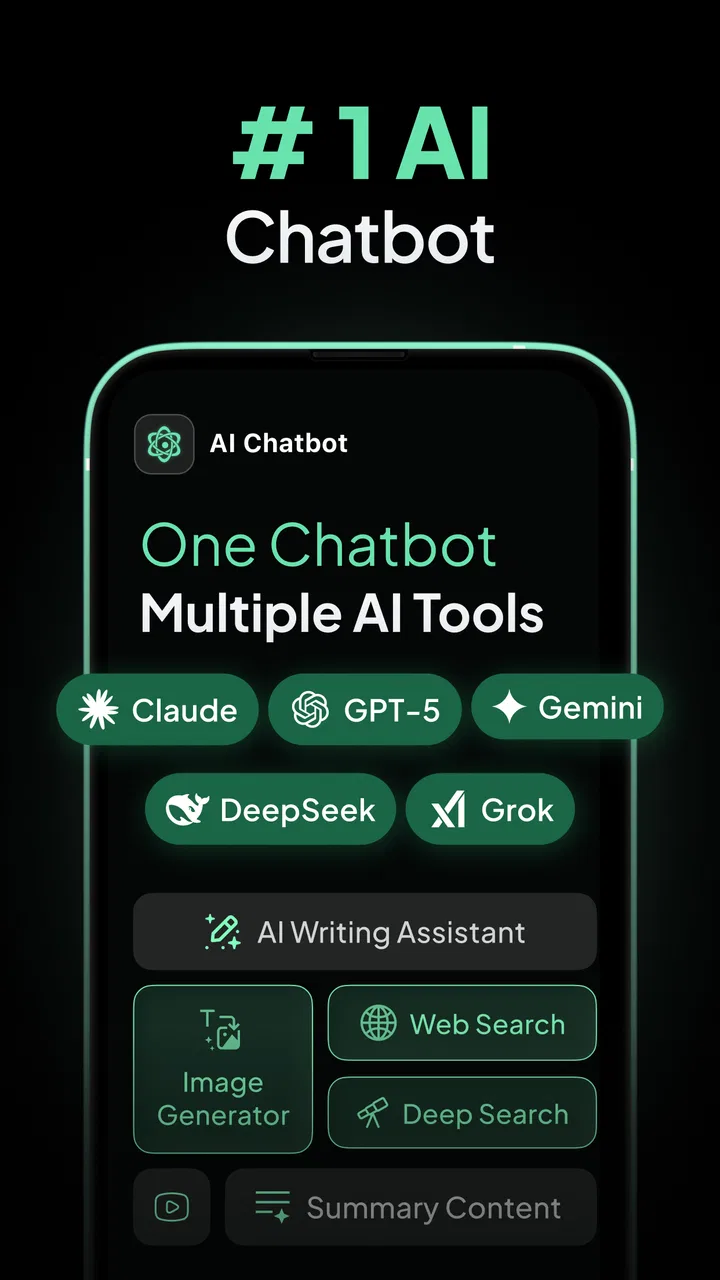
Ask Me Anything - AI Chatbot
- 3.8
- Rating
- 5.00M
- Installs
- Free
- Price

 Analysis by App-foxy
I approached Ask Me Anything - AI Chatbot as a practical productivity tool rather than a novelty chat app. Its basic promise is easy to understand: open an assistant, type a question, and use the response to move a task forward. In daily use, though, the quality of the experience depends less on asking random questions and more on how clearly you frame the job you want done. That makes this app most useful for people who treat AI as a drafting, organizing, and thinking aid instead of an unquestionable source of truth.
Developed by EVOLLY HK, the app is free to download and sits in the productivity category. It is available for Everyone, requires Android 6.0 or later, and has reached over five million installs. The current version is 2.0.2, while its average score is 3.8 from around twenty-two thousand ratings. Those figures suggest a widely tried assistant with a noticeably mixed experience: many people find value in it, but it is not the sort of tool that works perfectly for every question or every device.
Getting past the first points of friction
The first place I would expect a new user to get stuck is not the conversation itself, but the transition from opening the app to making a useful request. An AI assistant can look simple while still requiring a little discipline. If the first message is vague, the reply may also be vague, and that can make the app seem less capable than it really is. I had better results when I included the goal, the audience, the desired format, and any limits in one short instruction.
You May Also Like

 Blood Strike: 2.5 Anniversary
Blood Strike’s Loadouts Turn Every Drop Into a Tactical Gamble
A close look at Blood Strike’s custom loadouts: how fast access to signature weapons reshapes its battle royale rhythm, rewards preparation, and narrows the gap between fights.

 Pandora - Music & Podcasts
Pandora’s Music Is Easy to Start, but Harder to Recover
Pandora’s strength is its low-effort path from a seed to a station. Its weak spot is how much confidence it asks you to place in connection, setup, and quiet recovery.

 8 Ball Pool
 Is Built on Rivalries, Rematches, and Routine
A close look at the rivalries, rematches, shared routines, and unanswered safety questions that turn a quick pool match into a persistent mobile community.

 Samsung Music
’s Quiet Strength Is Playing What You Already Own
Its reach comes less from spectacle than from dependable access to a personal library. That simplicity is both the app’s strongest retention engine and its ceiling.

 AccuWeather: Weather Radar
AccuWeather Review: A Quick, Clear Forecast for Everyday Decisions
For everyday plans, the best forecast is the one you can understand quickly. AccuWeather makes rain timing, radar, and local conditions easy to act on, with a few trade-offs.

 Hill Climb Racing
Why Hill Climb Racing Still Turns Crashes Into One More Run
A tiny car, a bumpy hill and one more upgrade: Hill Climb Racing keeps resurfacing because its simple chaos makes every near-miss feel personal.
More From Our News Desk



For example, instead of asking for “help with a presentation,” I would ask for a six-point outline for a presentation aimed at new customers, using plain language and leaving space for examples. That wording gives the assistant something concrete to follow. The same approach works for meal planning, study notes, travel preparation, email drafts, or turning a long idea into a checklist. The advantage is not that the chatbot replaces judgment; it is that it reduces the effort needed to create a workable first version.
Setup should begin with the basics. I would install the latest available version, make sure the phone has a stable connection, and then test a very short request before attempting a long conversation. A simple prompt such as “summarize this topic in five bullet points” is useful as a first check because it quickly shows whether the app is responding normally. If the first request hangs, repeats an error, or returns an incomplete answer, trying a second short prompt is more informative than immediately pasting a large block of text.
It is also worth checking the phone itself before blaming the assistant. Android devices can restrict background activity, pause apps that have not been used recently, or behave differently when storage is nearly full. I would close other demanding apps, reopen the chatbot, and retry on a reliable connection. These are ordinary troubleshooting steps, but they matter here because a failed response can look like an AI problem when it is really an interrupted app session or a temporary network issue.
The most useful setup habit is to test the conversation with a small, low-risk request first. That gives you a clean baseline. Once the app responds properly, you can move to longer prompts and more important work without wondering whether a failure came from the wording, the connection, or the application.
How I structure prompts for better results
I found that the assistant becomes easier to control when I separate the request into clear parts. I state the task first, add context second, and specify the output style last. A request such as “rewrite this note for a polite workplace message, keep the meaning, use two short paragraphs, and do not add new promises” is far more dependable than “make this better.” This is a small change, but it prevents the common problem of receiving a fluent answer that does not actually solve the intended problem.
Another useful technique is to ask for a draft followed by a review. I might first request a checklist, then ask the assistant to identify missing steps or unclear wording. This two-stage workflow is more practical than expecting one message to produce a perfect result. It also gives me a chance to inspect the first answer before building on it, which is important when the subject involves dates, instructions, technical details, or anything that could cause trouble if misunderstood.
Long pasted material needs extra care. If I provide a large block of notes, I introduce what it contains and explain exactly what should happen to it. For instance, I can ask for action items only, preserve names and deadlines, and mark uncertain points instead of guessing. That instruction makes the output easier to check. Without it, a chatbot may summarize away details that I actually needed to keep.
Recovering a workflow when a response goes wrong
When a reply is poor, I do not immediately start over. First, I identify the type of failure. If the answer is too broad, I narrow the task. If it is too long, I set a length or format limit. If it misunderstands the context, I restate the key detail in a separate sentence. If it invents an assumption, I tell it not to assume and ask it to list what needs clarification. This is faster than repeatedly sending the same request with slightly different wording.
A useful recovery pattern is to ask the assistant to revise only one part of its previous answer. If a draft email has the right information but the wrong tone, I would request a warmer version while keeping the facts unchanged. If a list is useful but badly organized, I would ask for the same items grouped by urgency. Narrow revisions help preserve good work and reduce the chance that a complete rewrite introduces new errors.
If the app stops responding, I would copy any important text before leaving the conversation. Then I would close and reopen it, try a short message, and only afterward return to the original task. If a particular prompt repeatedly fails, I would divide it into smaller requests. This is especially sensible for documents, multi-part planning, or complicated instructions. Smaller stages are easier to inspect and easier to repeat if one step breaks.
There is also a practical reason to keep a personal copy of important outputs. A chatbot is convenient for generating text, but it should not be the only place where a final plan, application letter, study summary, or work note exists. I would copy finished material into the document or notes app I normally use. That keeps the assistant in its proper role: a flexible workspace for producing and refining content, not necessarily the permanent home for it.
Knowing when the app is not the real problem
Not every disappointing answer indicates a technical fault. Some questions are difficult because they need current information, specialist interpretation, or personal context that was never included in the prompt. The app may produce a confident-sounding response even when the request itself leaves too much room for guesswork. In those situations, I treat the answer as a starting point and verify anything important elsewhere.
This matters for health, legal, financial, academic, and workplace decisions. I can use the assistant to prepare questions, organize information, explain general terminology, or create a comparison checklist. I would not use a generated response as the sole basis for a serious decision. The smooth writing can make weak reasoning appear stronger than it is, so the responsibility for checking remains with me.
The same caution applies to factual research. If I need a current policy, a precise product specification, or a time-sensitive event detail, an ordinary search tool or an official source is usually the better first choice. Search is designed to help locate evidence, while a chatbot is better at transforming information into a draft, explanation, or plan. That distinction is one of the clearest ways to decide which tool to open.
Privacy also deserves a deliberate approach. Before pasting private correspondence, confidential work material, identification details, or sensitive personal records into any AI service, I would remove unnecessary names and details. Even when the task seems harmless, the safest workflow is to provide only what the assistant needs. For a writing exercise, placeholders are often enough. “Client A” and “Project B” can usually replace real names without changing the quality of the draft.
Where this assistant fits among familiar alternatives
Compared with a traditional notes app, this chatbot is better when I need help transforming an idea. Notes are excellent for storing my own words, but they do not normally turn rough thoughts into an outline, rewrite a paragraph in a chosen tone, or suggest questions I have overlooked. Ask Me Anything - AI Chatbot is more active: I bring an unfinished task, and it helps shape the next version.
Compared with a search engine, the trade-off is different. Search gives me direct access to pages and sources, while the chatbot gives me a conversational response that can be easier to digest. I prefer the assistant for brainstorming, rewriting, and explanations of familiar concepts. I prefer search when I need evidence, exact current details, official instructions, or several independent sources to compare.
Compared with a dedicated office suite, it is lighter and more flexible but less suitable as a complete document environment. I would use it to prepare a rough email, meeting agenda, or project outline, then move the result into the app where I manage the final document. That division of labor works well because the chatbot handles language and structure, while the dedicated tool handles storage, formatting, collaboration, and long-term organization.
The free entry point makes it easy to experiment, but users should pay attention to the purchase model. The app includes in-app purchases ranging from $2.99 to $114.99 per item. I would begin with ordinary tasks and decide whether the free experience is enough before spending anything. Someone who only wants occasional rewriting may have no reason to buy more, while a frequent user may consider extra access worthwhile only after confirming that the app fits their routine.
Everyday scenarios where it earns a place
One realistic use is preparing for a busy Monday. I could paste a rough list of tasks and ask the assistant to group them by urgency, identify dependencies, and turn the result into a short morning plan. I would still decide what is realistic, but the first sorting pass could save time. If a task is unclear, I can ask for the questions I should answer before starting it. That is more useful than simply asking for motivation.
For studying, I would use it as an active recall partner rather than a machine that writes all my notes. After reading a topic, I could ask for practice questions without answers, attempt them myself, and then request feedback on the weak areas. This approach makes the assistant part of a learning loop. The important limitation is that I would compare explanations with course material, especially when a precise definition or grading standard matters.
For communication, the app can help when I know what I mean but cannot find the right tone. I might provide a blunt draft and ask for a version that is clear, respectful, and still firm. I would then check every factual statement and restore any wording that sounds unlike me. The best result is usually an edited draft, not a message sent without review.
It is also handy for decision preparation. If I am comparing two options, I can ask for a neutral table-like set of criteria in plain text, followed by questions that would reveal which option suits my priorities. The assistant cannot choose my values, but it can expose trade-offs I might have ignored. That is a more honest use than asking it to declare a single winner with no context.
Who should use it and who should skip it
I would recommend this app to people who regularly face blank pages, messy notes, repetitive wording tasks, or planning problems. It is especially approachable for someone who wants a conversational way to begin without learning a complicated productivity system. The app’s Everyone rating also makes it broadly accessible, although accessibility in practice still depends on the user’s device and comfort with typing prompts.
I would be more cautious about recommending it to someone who needs source-linked research, strict document control, team collaboration, or a specialized professional tool. A dedicated research service is better when citations and traceable evidence are central. A full office platform is better when several people must edit the same file. A specialist planner is better when reminders, recurring tasks, and structured project tracking matter more than generating text.
I would also skip it as a primary tool if I wanted an assistant that always understands a personal workflow without repeated explanation. The quality of the output depends heavily on the instructions and context I provide. That is manageable, but it means the app rewards active users. If I am unwilling to review drafts, clarify ambiguous requests, or verify important claims, the convenience can become a liability.
My practical verdict after using it
Ask Me Anything - AI Chatbot is a useful pocket productivity assistant when I give it a defined job. Its strongest role is helping me move from a rough thought to a usable draft, outline, checklist, explanation, or set of questions. It is less convincing as a replacement for search, professional advice, document management, or careful fact-checking.
The main lesson from using it is simple: treat the first response as material to work with, not as a finished answer. Start with a small request, add context, specify the format, and revise one problem at a time. If the app fails, test the connection and device before rebuilding the whole task. If the answer is fluent but uncertain, change tools and verify the substance.
With that mindset, the free version is worth trying for everyday writing and organization. The paid options deserve a slower decision because the individual purchases can reach $114.99. I would only spend money after finding a repeated workflow that genuinely saves me effort. For casual users, the free starting point is enough to judge the experience; for heavy users, the real question is not whether the chatbot can answer, but whether its answers fit reliably into the way they already work.
My final recommendation is therefore balanced: install it if you want a conversational helper for drafts, ideas, and structured thinking, and keep a search engine, notes app, and trusted sources beside it. Used that way, Ask Me Anything - AI Chatbot can make small daily tasks easier without pretending to be the entire productivity system.
FAQs for Ask Me Anything - AI Chatbot
01What is Ask Me Anything - AI Chatbot, and what can it do?
Ask Me Anything - AI Chatbot is an artificial intelligence assistant designed to answer questions, explain topics, generate ideas, summarize information, and help with everyday writing tasks. During testing, it was useful for brainstorming, drafting messages, creating outlines, and providing quick explanations. Its answers can vary in quality, so users should review important information instead of treating every response as completely accurate.
02Does Ask Me Anything - AI Chatbot require an internet connection?
Yes, the chatbot generally needs an active internet connection because conversations are processed through online artificial intelligence services. It may not work correctly in airplane mode or in areas with unstable connectivity. Response speed can also depend on network quality and server availability. Before downloading, users should check the app’s current requirements and confirm whether mobile data usage may apply.
03Is Ask Me Anything - AI Chatbot free to use?
The app may offer free access with limitations, while advanced features, higher usage limits, or premium tools can require a subscription or in-app purchase. Users should carefully review the pricing page before starting a trial, especially the renewal terms and cancellation process. Availability of features and prices may differ between Android and iOS and can change with future updates.
04Can I trust the answers provided by Ask Me Anything - AI Chatbot?
The chatbot can provide helpful and well-written responses, but it should not be considered an unquestionable source of truth. Artificial intelligence may misunderstand prompts, produce outdated information, or confidently generate incorrect details. For medical, legal, financial, academic, or safety-related questions, verify the response with reliable official sources or a qualified professional before making decisions.
05Does Ask Me Anything - AI Chatbot protect my conversations and personal information?
Before using the app, review its privacy policy to understand how prompts, account details, device information, and conversation history may be collected or processed. Avoid entering passwords, payment details, confidential work documents, or sensitive personal information unless you clearly understand the app’s data practices. Privacy options, data retention, and account deletion features may depend on the current version.
Pros
- Quick answers for everyday questions and brainstorming.
- Useful for drafting messages
- summaries
- and creative content.
- Simple chat interface that is easy for beginners to navigate.
- Can help explain complex topics in more accessible language.
- Available whenever you need on-demand conversational assistance.
Cons
- Answers may occasionally be inaccurate or lack important context.
- Some features may require a subscription or in-app purchases.
- AI responses can feel generic without detailed prompts.
- Privacy concerns may arise when sharing personal information.
- Requires an internet connection for most chatbot functions.

Ask Me Anything - AI Chatbot
Gallery